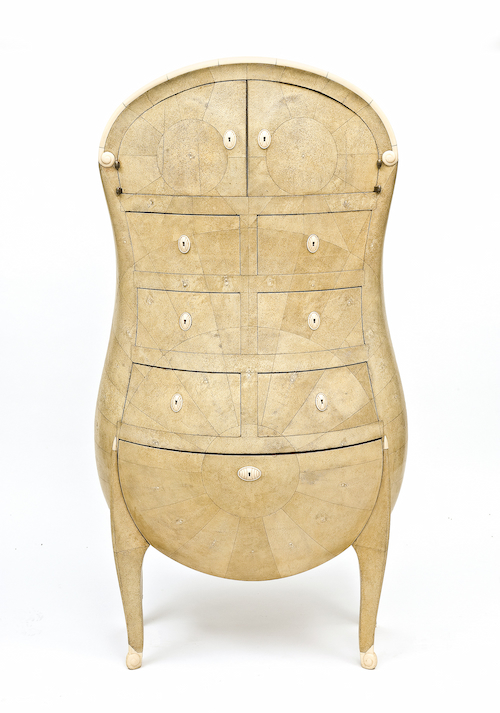
André Groult, Chiffonière Anthropomorphe with shagreen, ivory and silver hinges, circa 1925. Photo © MAD Paris
THE SHAGREEN STORY AND ART DECO REVIVAL
In 1910, designer Paul Iribe rediscovered old shagreen stocks. He asked ébéniste Clément Rousseau to create a commode covered in green shagreen. The piece launched the Art Deco shagreen movement. Jean-Michel Frank became the most famous champion, covering furniture in simple rectangular panels. His work emphasized raw luxury. Low tables, consoles, desks, screens. André Groult created the legendary Chiffonière Anthropomorphe with shagreen following curved surfaces, now in the Musée des Arts Décoratifs in Paris. Jacques Adnet combined shagreen with brass and leather. Marcel Coard created architectural pieces. Émile-Jacques Ruhlmann used it as elegant accent. Jules Leleu designed entire suites. These Art Deco masterpieces now sit in museums worldwide.
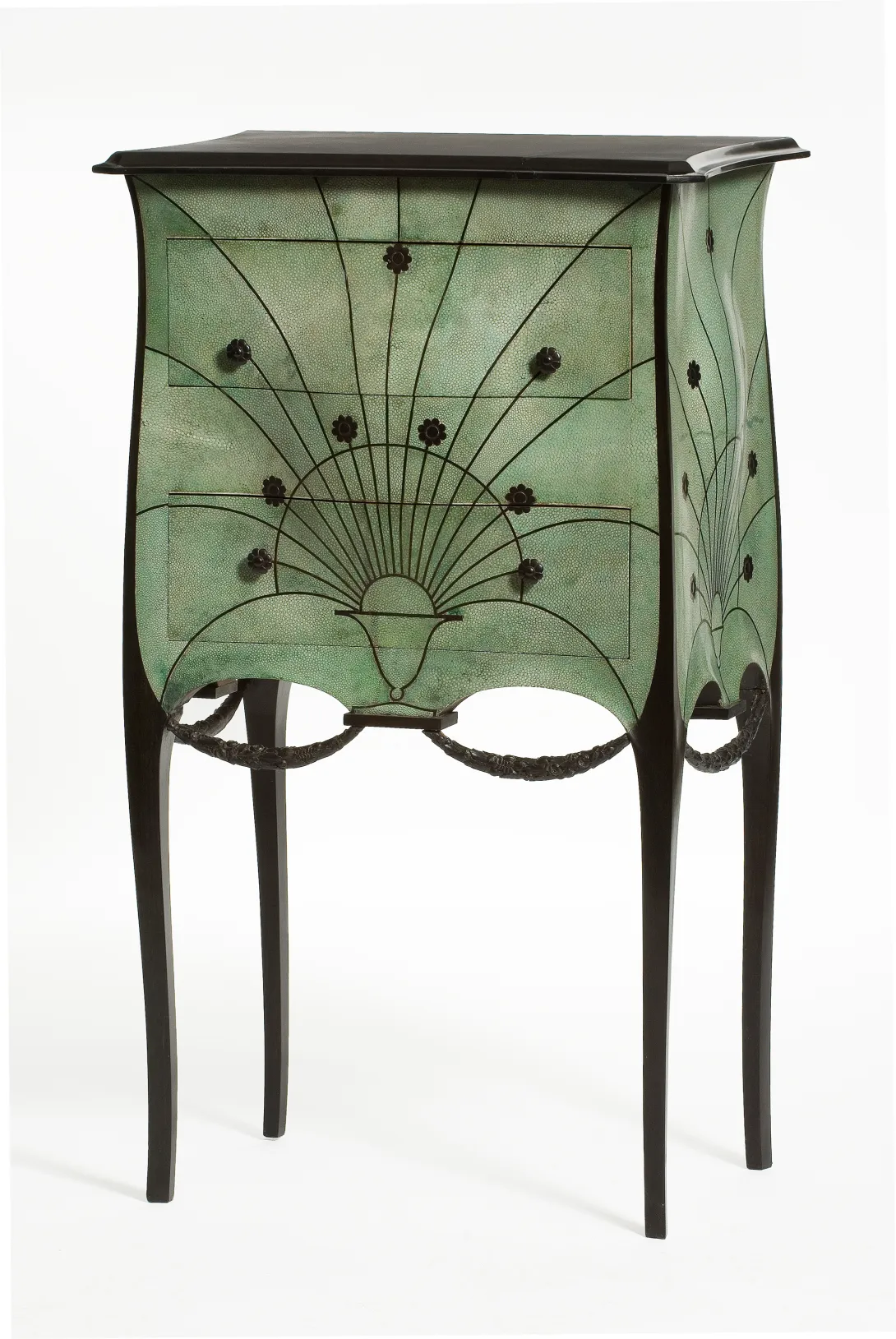
Paul Iribe, Commode with green shagreen and ebony, circa 1912. Created for Jacques Doucet. Photo © MAD Paris
SHAGREEN AS A FINISH
Shagreen is untanned stingray skin with pearl-shaped beads covering the surface. These beads are écailles placoïdes, made of enamel and dentine like teeth. This creates legendary durability. Raw skins arrive dried and salted. Artisans remove cartilage by hand, sand smooth, then dye or leave natural. Colors range from natural cream to chocolate, black, green, contemporary blues and reds. Shagreen can also be cut into pieces for shagreen marquetry, creating intricate patterns.
Processing takes years to master. Each skin differs in bead size and pattern. The material cracks easily if handled wrong. Once dried and adhered to furniture, it becomes rigid as wood. The surface lasts centuries. Pearl beads catch light, creating luminous effects. Only a handful of French artisans maintain this complete skill today.
SHAGREEN FURNITURE
French ébénistes apply shagreen to furniture following Art Deco traditions. Flat panels on cabinets, tables, desks, consoles. Some specialize in curved applications like the famous Groult pieces. Others combine shagreen with other luxury materials. Shagreen with straw marquetry, shagreen with bronze or brass details, shagreen with rare woods like Macassar ebony or palmwood. The material works beautifully for both reproduction Art Deco pieces and contemporary designs. Studio Ziricote works with specialists who master these different applications.
SHAGREEN WALL PANELS
Beyond furniture, shagreen works beautifully for architectural applications. Wall panels, interior doors, built-in cabinetry, decorative screens. Large installations require careful skin selection to create cohesive patterns across multiple panels. The natural variations between skins create organic visual effects. French specialists understand how to match tones and arrange pearl beads for architectural scale. Studio Ziricote manages these complex projects from artisan selection through final installation.
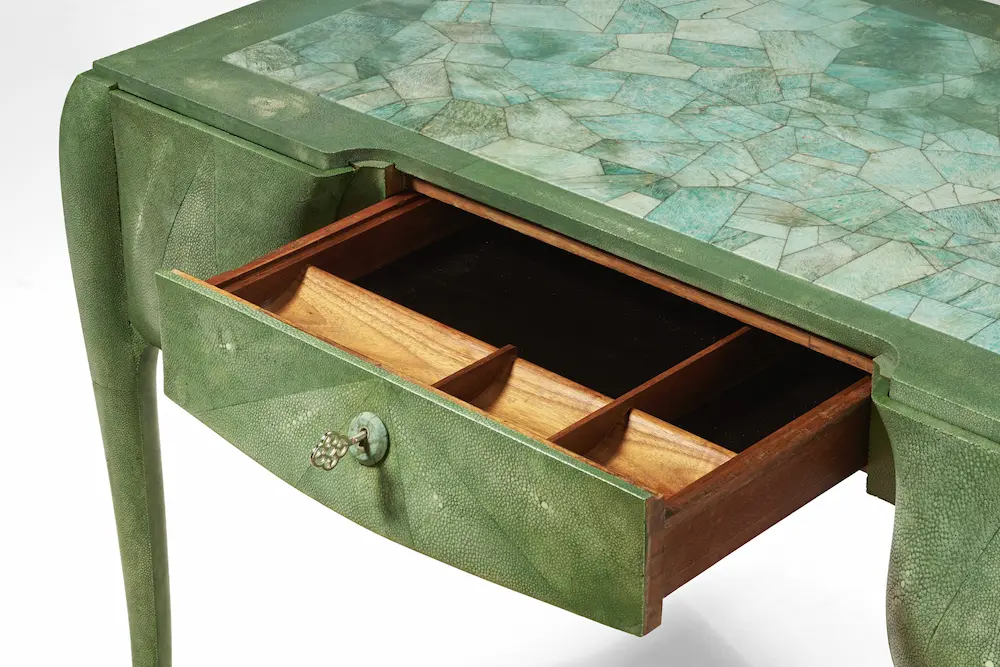
André Groult, important desk circa 1925, featuring shagreen, mahogany, amazonite, polished bronze. Sold at auction by Christie’s for $930,00 USD. Photo Credit: Christie’s.
WORKING WITH STUDIO ZIRICOTE ON SHAGREEN PROJECTS
Your shagreen project begins with understanding your vision. A single furniture piece or complete architectural installation? Reproduction Art Deco or contemporary design? Natural tones or custom dye colors? Each application requires different expertise. We match your requirements to the right French specialist. Some focus on furniture applications. Others excel at architectural installations. Some master traditional Art Deco techniques. Others push contemporary boundaries. We manage the complete project from artisan selection through delivery to your residence.
READY TO START YOUR SHAGREEN DECORATIVE PROJECT?
Custom furniture, wall panels, millwork. We identify the right maker and manage the complete process from France to your residence.