
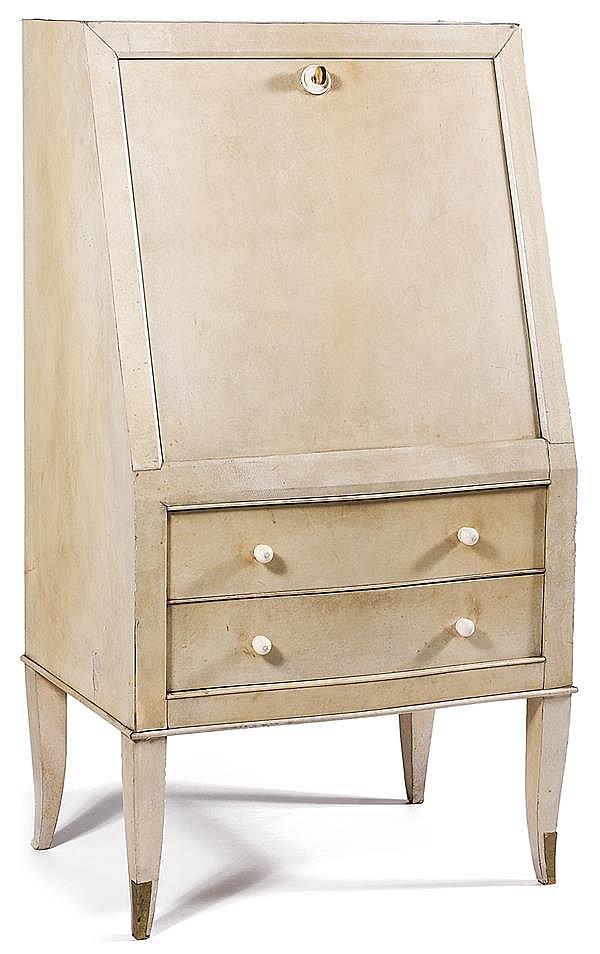
Secretaire covered with parchment by André Arbus, circa 1937, sold at auction for 28,072€ by TAJAN©
PARCHMENT FINISH
Parchment was widely used during the Art Deco period for creating furniture and wall paneling. After a break, it has now become very popular again among luxury interior designers. Artisans stretch the parchment skins over wooden frames. It dries under tension for weeks. Then they sand it smooth. Unlike leather, parchment is not tanned. The result is rigid, warm to the touch. Some skins are translucent, others opaque. French artisans have perfected this craft over centuries. Once dried, they can tint it in custom colors, age it for patina, or illuminate it with gold leaf. Each piece of skin brings unique texture and character. It ages beautifully over decades.
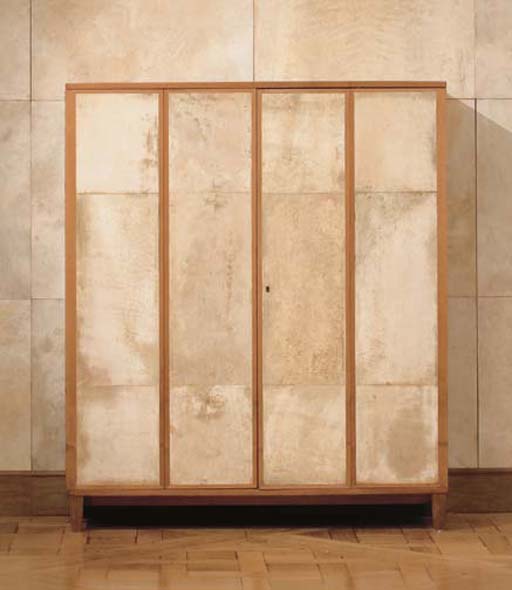
Cabinet by Jean-Michel Frank, circa 1929. Doors are covered with parchment. Sold at auctions by Christie’s in 2006 for 908,000€.
HISTORY OF PARCHMENT IN FURNITURE DESIGN
The technique originated in the Far East. It arrived in Europe during the 17th century. The craft nearly disappeared until the 1920s Art Deco movement. Jean-Michel Frank and André Groult revived it in Paris. Jean Royère used it extensively after World War II. Today, specialized French artisans continue this heritage.
PARCHMENT DECORATIVE TECHNIQUES
French artisans apply multiple techniques to parchment surfaces. Each transforms the material differently.
Aging and patina create vintage aesthetics. Artisans use tea staining, controlled oxidation, chemical treatments. The skin develops warm amber tones, subtle darkening, authentic antique appearance. Perfect for traditional interiors or Art Deco reproductions.
Dyeing and tinting offer unlimited color possibilities. Natural pigments produce soft pastels to deep indigo. Chemical dyes achieve vibrant jewel tones. Artisans can dye before stretching or after drying. Some specialists develop exclusive color palettes. Shibori tie-dye creates organic patterns on the surface.
Parchment marquetry assembles cut pieces like a mosaic. Artisans select skins with different natural tones. They cut precise shapes, arrange them in patterns, glue them onto substrates. The technique creates tonal variations and geometric designs. Different from straw marquetry but equally intricate.
Weaving and braiding interlace thin parchment strips. Artisans cut skins into narrow bands, weave them over and under like basket work. The braided surface creates texture and pattern. Used for decorative panels, furniture inlays, three-dimensional effects.
Engraving cuts patterns into the parchment surface. Some artisans use CNC machines for precision geometric designs. Others hand-carve traditional motifs. The engraved lines create shadows and depth. Particularly effective when backlit, the patterns glow through translucent skins.
Gold leaf illumination brings medieval manuscript tradition to furniture. Artisans paint designs with pigments, apply gold or silver leaf, create decorative motifs. Hand-painted panels become functional art. This technique requires specialized training in traditional illumination methods.
Embossing adds three-dimensional texture. Artisans press patterns into wet parchment as it dries. Coral textures, geometric patterns, custom motifs. The raised surface catches light and shadow. Creates visual depth without color.
Protective finishes ensure durability. Lacquering seals the surface, creates high gloss, protects from moisture. Resin coating works for high-use surfaces like tabletops. Waxing provides subtle sheen and water resistance. French specialists match the finish to the application.
THE MATERIAL AND PROCESS
French artisans work with multiple types of parchment skins. Goat skin is most common for furniture. Sheep and lamb offer the finest, most translucent quality. Calf skin, called vellum, provides premium smoothness. Cow skin delivers the thickest, most robust option. Horse skin is rare, used primarily for musical instruments. Ostrich skin is the newest, available exclusively from specialized French tanneries.
The process begins with cleaning. Artisans soak skins in lime solution to remove hair. They stretch each skin over wooden frames, pulling tight from all sides. The skin dries under tension for weeks, sometimes a month and a half. As it dries, it becomes rigid. Artisans sand the surface smooth, removing imperfections. They inspect for natural markings, veins, texture variations. These become design features, not flaws.
Selecting skins requires expert eye. Artisans match tones, pair textures, arrange natural patterns. For large projects like wall panels, they choose dozens of skins. Each must complement the others. The goal is harmony with variation. Too uniform looks artificial. Too varied looks chaotic. French parchment specialists master this balance through generations of practice.
PARCHMENT FURNITURE
Nowadays furniture makers and luxury interior designers draw heavy inspiration from master Art Deco makers such as André Arbus, Jacques Adnet, and Jean-Michel Frank. Parchment, alongside straw marquetry, shagreen, mica, and luxury wood species, was widely used during that period and remains popular today. French artisans apply parchment to furniture, screens, and lampshades. Master ébénistes often combine parchment with these other luxury finishes. Some ateliers specialize exclusively in parchment. Others integrate it as one technique among many. Studio Ziricote works with both. Your project determines the right match.
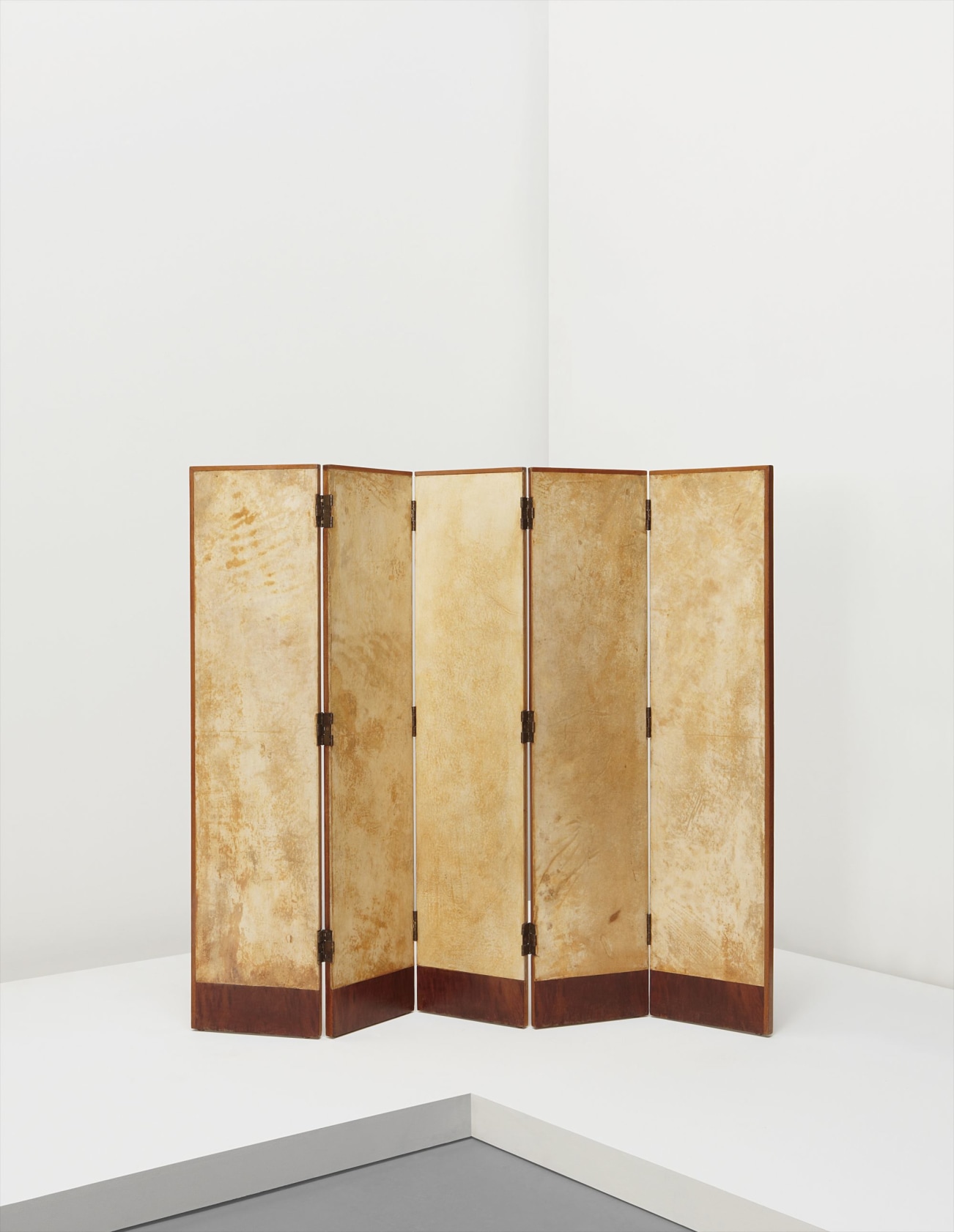
Screen with parchment and mahogany circa 1929 by Jean Michel Frank. Sold at auction for £74,500 at Phillips©.
PARCHMENT WALL PANELS
Parchment transforms walls and architectural elements. Full wall installations, built-in cabinetry, interior doors, decorative panels. Jean-Michel Frank’s famous Vicomte de Noailles living room featured entire parchment walls creating a stormy sky effect. The contrasting natural tones of each skin produce organic patterns. Some installations use hundreds of individual skins, each carefully selected and matched. The surface ages beautifully over decades, developing rich patina. French parchment specialists understand how to select, arrange, and install skins for architectural scale. Studio Ziricote manages these complex projects from artisan selection through final installation.
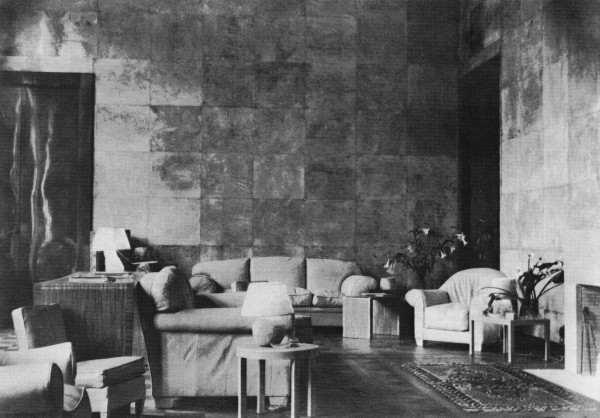
Interior by Jean-Michel Frank featuring parchment wall panels. Commissioned by Charles Vicomte de Noailles et de Marie-Laure de Noailles in 1926
WORKING WITH STUDIO ZIRICOTE ON PARCHMENT PROJECTS
Your parchment project begins with understanding your vision. A lampshade with translucent ostrich parchment? A study room with walls covered in parchment? Monumental pivot doors with brass frames and parchment surfaces? An intricate piece of furniture with parchment only or associated with other special materials? Each application requires different expertise and techniques.
French parchment specialists fall into different categories. Some are tanneries producing skins themselves. Others are furniture makers who source and apply them. Specialist decorative artisans illuminate parchment with gold leaf and pigments, creating artistic masterpieces. Some specialize in Art Deco reproduction. Others push contemporary boundaries. We match your requirements to the right specialist. Then we manage the complete project from Paris to your interior design projects worldwide.
READY TO START YOUR PARCHMENT PROJECT?
Custom furniture, wall panels, millwork. We identify the right maker and manage the complete process from France to your residence.